FIP Treatment Guideline
FIP Treatment & Clinical Management Handbook
V10Evidence-Based GS-441524 Antiviral Protocol & Feline Care Reference
Comprehensive Clinical Protocol for Feline Infectious Peritonitis (FIP)
Feline Infectious Peritonitis is caused by a mutation of the Feline Coronavirus (FCoV). Nucleoside analog therapy (GS-441524) inhibits viral RNA replication, transforming FIP from a historically fatal condition into a highly treatable disease with an 84-day structured regimen.
Clinical Diagnosis & FIP Symptoms
Select a clinical phenotype below to inspect diagnostic hallmarks and severity-stratified dosing tiers.
Primary Clinical Signs & Dosing Tiers
- Abdominal Ascites (6 mg/kg): Pear-shaped abdominal distension with fluid wave and fluctuating fever.
- Anorexia ≥3 Days (7 mg/kg): Prolonged inappetence requiring higher initial antiviral loading.
- Pleural Effusion (8 mg/kg): Labored breathing (tachypnea) due to thoracic fluid accumulation.
Diagnostic Confirmation
Effusion analysis yields viscous, straw-colored fluid with high total protein (>3.5 g/dL), low A/G ratio (<0.4), positive Rivalta test, and RT-PCR FCoV detection.
Clinical Note: Avoid draining all abdominal fluid unless causing respiratory distress, as rapid removal depletes systemic albumin.
Primary Clinical Signs & Dosing Tiers
- Without Ocular/Neuro (7 mg/kg): Chronic weight loss, persistent fever, and enlarged mesenteric lymph nodes.
- Severe Jaundice / Icterus (8 mg/kg): Marked hyperbilirubinemia with yellow sclera, pinnae, or mucous membranes.
- Renal cortical irregularity or ileocecocolic granulomas on abdominal palpation.
Diagnostic Confirmation
Abdominal ultrasound reveals mesenteric lymphadenopathy, renal cortical hypoechoic halos, or intestinal wall thickening. Fine-needle aspirate (FNA) shows pyogranulomatous inflammation.
Clinical Note: Always inspect pupils and gait, as Dry FIP frequently progresses to Ocular or Neurological forms.
Severity-Stratified Ocular Tiers
- Mild Uveitis / Iritis (8 mg/kg): Subtle iris discoloration (amber/brown shift) and mild aqueous flare.
- Uneven Pupil / Anisocoria (10 mg/kg): Asymmetric pupil constriction or synechiae indicating deeper ciliary involvement.
- Blurred Vision / Severe Hyphema (12 mg/kg): Dense corneal precipitates, retinal detachment, or visual impairment.
Therapeutic Management
Because the blood-ocular barrier restricts drug diffusion, systemic GS-441524 must be scaled from 8 mg/kg up to 12 mg/kg depending on lesion severity.
Adjunctive Care: Topical ophthalmic anti-inflammatory drops (e.g., prednisolone acetate 1% once corneal ulcers are ruled out) help prevent secondary glaucoma.
Severity-Stratified CNS Tiers
- Mild Weak Leg / Ataxia (10 mg/kg): Hindlimb wobbliness, reluctance to jump, mild head tilt, or nystagmus.
- Paralysis / Severe CNS (12 mg/kg): Non-ambulatory paresis, spinal paralysis, focal/generalized seizures, or incontinence.
Therapeutic Management
Cerebrospinal fluid (CSF) drug levels are ~20–25% of plasma levels. High-dose therapy (10–12 mg/kg every 24h, or split every 12h in critical cases) is essential to cross the blood-brain barrier.
Clinical Note: Subcutaneous injections are strongly recommended over oral pills during the initial 2–4 weeks of neurological stabilization.
GS-441524 Dosage Protocol & Estimator
Select body weight, clinical presentation, and GS meds type option to compute exact dosing per day.
Interactive GS-441524 Dosage Estimator
Supports Injection (15 / 20 mg/ml) & Injection-Equivalent Oral Pills (8 / 16 / 32 mg)
Standard baseline dose (6 mg/kg) for uncomplicated abdominal effusive FIP.
Switch between injections and oral pills.
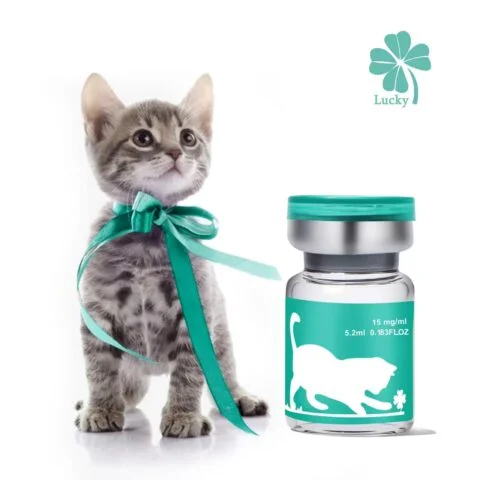
15 mg/ml is more comfortable to smaller and younger kitty 1 year less.
16 mg means equal to 16-mg injection potency
Clinical Presentation & Severity Chart
All 10 clinical presentations mapped to target daily GS-441524 dosing tiers (6 mg/kg to 12 mg/kg). And explore detailed symptoms & dosage knowledge to learn the exact dose you should give to your cat.
| Clinical Presentation & Severity | Target Dose | Primary Clinical Indication |
|---|---|---|
| Wet FIP (Abdominal / Standard) | 6 mg/kg | Uncomplicated peritoneal effusion without severe anorexia or CNS/ocular signs |
| Wet/Dry FIP (No eat ≥3 Days) • Dry FIP (Without Ocular/Neuro) | 7 mg/kg | Non-effusive organ granulomas or wet/dry cases with ≥3 days of prolonged anorexia |
| Wet FIP (Pleural) • Dry FIP (Severe Jaundice) • Ocular FIP (Mild Uveitis, Iritis) | 8 mg/kg | Thoracic effusion, marked icterus, or early anterior chamber uveitis/iritis |
| Ocular FIP (Uneven Pupil) • Neuro FIP (Mild Weak Leg) | 10 mg/kg | Anisocoria/pupil asymmetry or early hindlimb ataxia/weakness requiring barrier penetration |
| Ocular FIP (Blurred Vision) • Neuro FIP (Paralysis) | 12 mg/kg | Severe visual impairment/retinal involvement or non-ambulatory CNS paralysis/seizures |
Weight-Based Quick Reference Chart (Injections & Oral Pills)
Aligned across 15/20 mg/ml vials and 8/16/32 mg oral strengths (8 mg pills for 1.0 kg kittens). Swipe horizontally on mobile (Weight column stays pinned).
| Weight | 6 mg/kg (Wet Std) | 7 mg/kg (Dry / No Eat) | 8 mg/kg (Pleural/Jaundice/Eye) | 10 mg/kg (Pupil/Weak Leg) | 12 mg/kg (Vision/Paralysis) | |||||
|---|---|---|---|---|---|---|---|---|---|---|
| 15 / 20 ml | Pills (8/16mg) | 15 / 20 ml | Pills (8/16mg) | 15 / 20 ml | Pills (8/16mg) | 15 / 20 ml | Pills (8/16/32mg) | 15 / 20 ml | Pills (8/32mg) | |
1.0 kg
(2.2 lb) |
0.40 / 0.30 ml |
1.0 × 8mg |
0.50 / 0.35 ml |
1.0 × 8mg |
0.55 / 0.40 ml |
1.0 × 8mg |
0.70 / 0.50 ml |
1.5 × 8mg |
0.80 / 0.60 ml |
1.5 × 8mg |
2.0 kg
(4.4 lb) |
0.80 / 0.60 ml |
1.0 × 16mg |
0.95 / 0.70 ml |
1.0 × 16mg |
1.10 / 0.80 ml |
1.0 × 16mg |
1.35 / 1.00 ml |
1.5 × 16mg |
1.60 / 1.20 ml |
1.0 × 32mg |
3.0 kg
(6.6 lb) |
1.20 / 0.90 ml |
1.5 × 16mg |
1.40 / 1.05 ml |
1.5 × 16mg |
1.60 / 1.20 ml |
1.5 × 16mg |
2.00 / 1.50 ml |
1.0 × 32mg |
2.40 / 1.80 ml |
1.5 × 32mg |
4.0 kg
(8.8 lb) |
1.60 / 1.20 ml |
1.5 × 16mg |
1.90 / 1.40 ml |
2.0 × 16mg |
2.15 / 1.60 ml |
2.0 × 16mg |
2.70 / 2.00 ml |
1.5 × 32mg |
3.20 / 2.40 ml |
1.5 × 32mg |
5.0 kg
(11.0 lb) |
2.00 / 1.50 ml |
2.0 × 16mg |
2.35 / 1.75 ml |
2.5 × 16mg |
2.70 / 2.00 ml |
2.5 × 16mg |
3.35 / 2.50 ml |
2.0 × 32mg |
4.00 / 3.00 ml |
2.0 × 32mg |
SC Subcutaneous Injection Protocol
Rotate injection sites daily along the dorsal thorax and flank (2–3 cm off the spine, from shoulder blades to hip). Use 21G–23G needles for viscous solutions and store vials refrigerated (2°C–8°C) away from direct light.
PO Oral Pill Protocol (8 / 16 / 32 mg)
Administer oral GS-441524 pills on an empty stomach (fast 20 minutes before and 30 minutes after dosing) with a small syringe of water to ensure smooth esophageal transit. Always round partial doses up to the nearest 0.5 pill.
84-Day Treatment & Clinical Recovery Roadmap
Four structured milestones from acute viral suppression through post-treatment clearance.
Acute Stabilization & Viral Suppression
- • Fever typically resolves within 24–72 hours of initiating GS-441524.
- • Appetite, grooming behavior, and baseline alertness steadily return.
- • Abdominal/pleural effusions begin gradual physiological reabsorption.
Tissue Repair & Weight Restoration
- • Complete resolution of visible ascites; rapid lean muscle weight gain.
- • Ocular inflammation clears and neurological ataxia improves substantially.
- • First midpoint blood panel (Week 4) confirms rising Albumin & Hematocrit.
Immune Consolidation & Clearance
- • Hyperglobulinemia normalizes; A/G ratio climbs toward target (≥0.7).
- • Week 8 and Week 11–12 exit blood panels verify full hematologic recovery.
- • Never stop early even if cat appears 100% clinically normal at Week 8.
84-Day Observation & Cure Confirmation
- • Antiviral therapy ceases on Day 84 once exit bloodwork criteria are met.
- • Monitor weekly weight, appetite, temperature, and energy for 12 weeks.
- • Completion of 84 relapse-free days marks official clinical cure.
Bloodwork & Biomarker Monitoring Checklist
Evaluate Complete Blood Count (CBC) and Serum Biochemistry at Day 0, Week 4, Week 8, and Week 12. Check off markers as verified during exit review.
Recovery & 84-Day Post-Treatment Observation
Clinical discharge criteria and home surveillance protocols to safeguard long-term remission.
Mandatory Criteria to Stop Therapy (Day 84)
- 1 84 Full Days Completed: Uninterrupted daily antiviral administration at weight-adjusted dosage.
- 2 Normal Bloodwork Profile: A/G ratio ≥0.7, normal SAA, resolved anemia, and normalized globulin levels.
- 3 Zero Clinical Symptoms: Absence of fever, effusion, ocular uveitis, or neurological deficits for at least 4 consecutive weeks.
12-Week Observation Surveillance Rules
- • Minimize Immunosuppressive Stress: Postpone elective surgeries (spay/neuter), boarding, and non-core vaccinations until after Day 84 of observation.
- • Weekly Home Log: Record body weight, resting respiratory rate (<30 breaths/min), and rectal/ear temperature if lethargy occurs.
- • Relapse Protocol: In rare relapse cases (<3–5%), restart GS-441524 immediately at +2 to +4 mg/kg above the prior dose for an extended course.
Clinical Disclaimer: This handbook is designed for veterinary reference and caregiver education. Always coordinate bloodwork interpretation and dosing adjustments with a licensed veterinarian.
↑ Back to Top
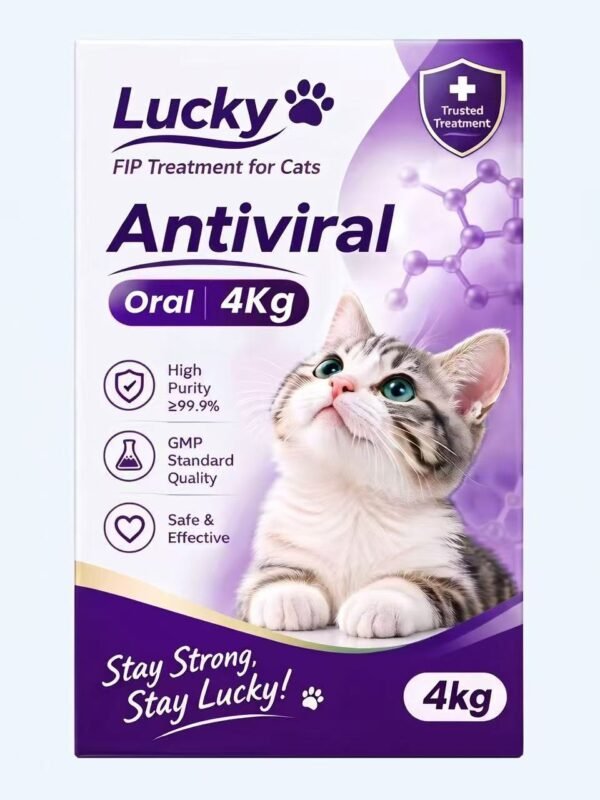
Lucky FIP Oral Pill Ⅲ 24 mg (4kg) *100 Pills
Lucky FIP Oral Pill Ⅲ 24 mg (4kg)

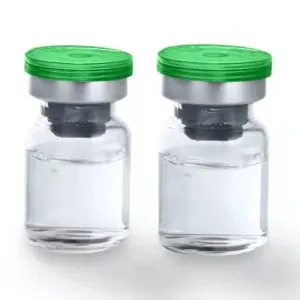
Lucky FIP GS 20 mg/ml * 10 vials


Lucky FIP GS 15 mg/ml * 10 vials
Lucky FIP Oral Ⅰ 6 mg (1kg) * 100 Pills
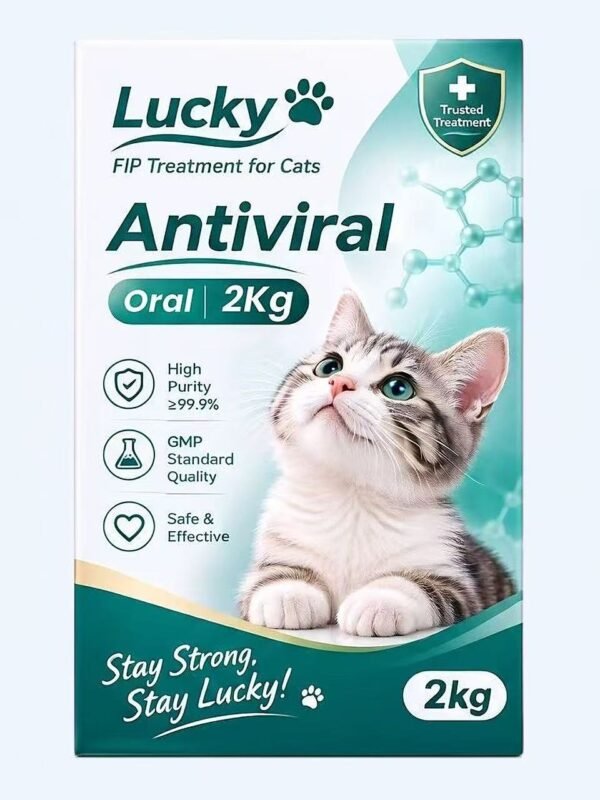

Lucky FIP Oral Pill Ⅱ 12 mg (2kg) A La Carte

Lucky FIP Oral Pill Ⅰ 6 mg (1kg) A La Carte
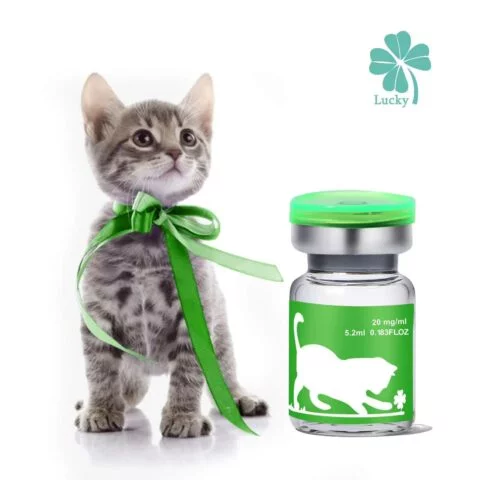
FIP Special treatment GS Lucky 20 mg/ml